
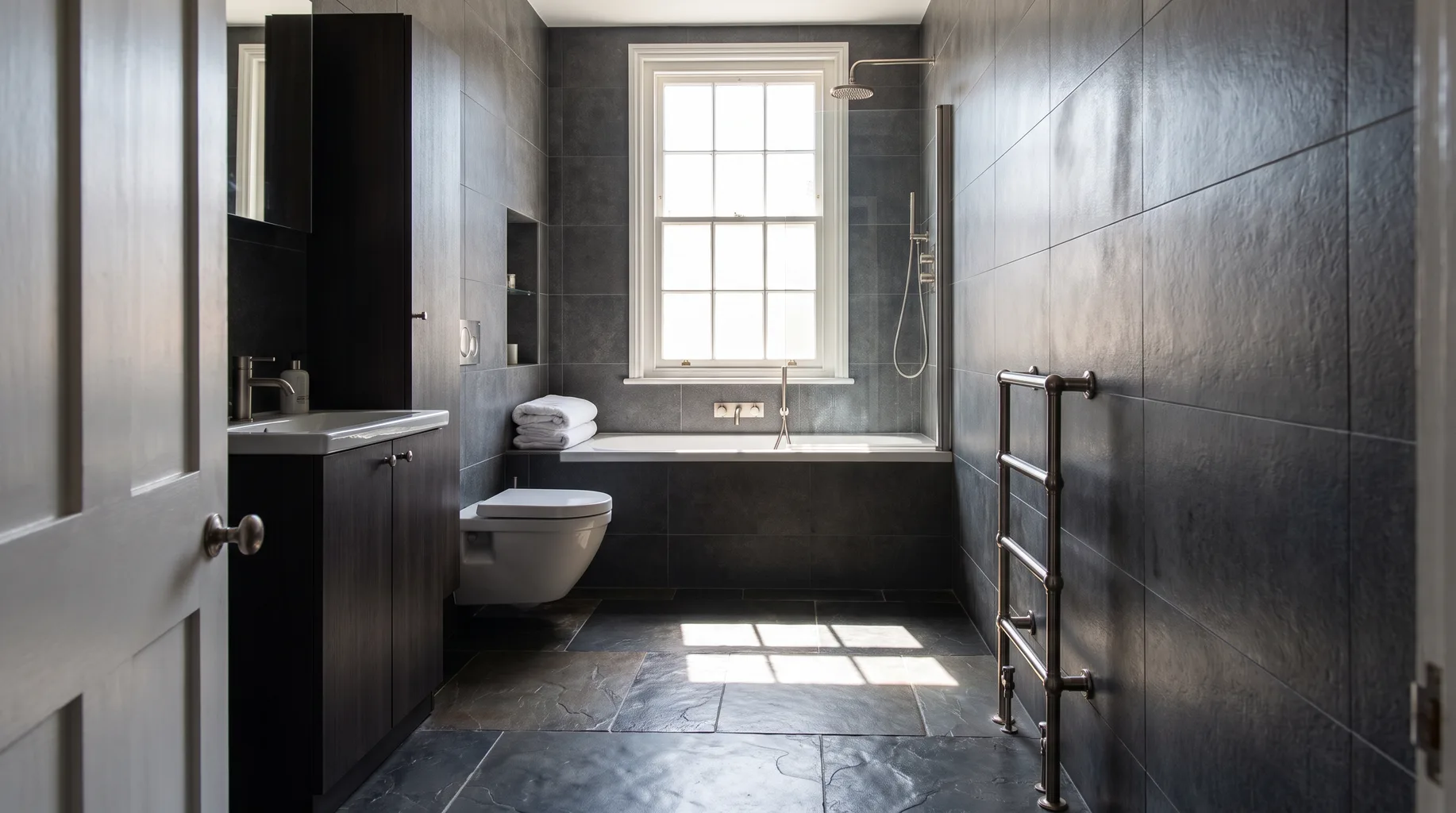
Bathroom installation cost in Windsor
Fit-only bathroom installation in Windsor starts from £3,500 — that's the labour and fitting cost for a straightforward replacement using your own supplied products, with the waste and water staying roughly where they already are. What pushes the number up from there is almost never the brand of tap or tile you choose; it's the structural and plumbing work underneath the finish, and in Windsor that work looks quite different depending on which part of town you're in. Windsor's housing splits fairly cleanly into two character types. Close to the Castle and the historic centre, there's a concentration of Georgian and Victorian town houses, many on narrow plots with limited rear access and period staircases that constrain how much material can be moved through the building at once. Further out, towards the edges of town, the housing is more typically inter-war and post-war family homes, with a scattering of newer residential developments on sites that have been redeveloped over the years. Those two situations don't change the £3,500 starting point, but they do change what's realistic to specify and what it costs to get there.
Install price ranges from £3,500
The £3,500 starting point covers fit-only installation of a bathroom where the room's footprint and the position of the waste and supply pipes stay broadly as they are. As the scope grows — a full reconfiguration, a larger room, more fixtures, or higher-specification finishes that need more careful handling — the fit-only price moves up from there. We don't publish a single all-in average because two bathrooms of the same size can cost very differently depending on what's involved below the surface: whether the waste run has to move, what the floor and walls are made of underneath, how many separate trades the fit actually requires, and — in Windsor particularly — how straightforward it is to get materials and waste in and out of the building. A fixed quote only comes after survey, once we've seen the room and confirmed what's involved.
What changes the cost
A handful of decisions account for most of the difference between a £3,500 job and a considerably larger one. Moving the waste run — repositioning a WC or shower away from its existing soil pipe — is one of the biggest single cost drivers, because it usually means opening up a floor or chasing a wall rather than connecting back to what's already there. Choosing a wet room over a shower tray is another: a wet room needs a formed and tanked fall built into the floor structure, which is a different scope of work to dropping a tray onto an existing subfloor. Material choice matters too — natural stone such as marble, limestone or travertine typically needs more careful substrate preparation, different adhesives and more cutting time than porcelain, and that additional handling is reflected in the fit-only price even before you account for the material cost itself. None of these are reasons to avoid a particular spec; they're simply the things we cost properly at survey rather than guessing at.
Repairs pricing
Not every job starts from scratch. If you've got an existing bathroom with a specific fault — a leak, a failed seal, a fitting that's come loose — repairs start from £200. An emergency call-out carries a £500 minimum, reflecting the cost of getting a fitter to you outside a normal scheduled visit. One thing worth being clear about: we don't offer regrouting as a standalone repair service. If the grout has failed to the point it needs addressing, that's usually a sign of a wider issue with the tiling or substrate underneath, and we'll talk through what's actually needed rather than patching over a symptom.
How Windsor's housing stock affects typical specification
Windsor's housing splits fairly cleanly into two character types, and each one tends to push specification and cost in a different direction. Close to the Castle and the historic centre, the Georgian and Victorian town houses often sit on narrow plots with limited rear access and period staircases that constrain how much material can be moved through the building at once — a large freestanding bath or a heavy natural stone slab that would be routine to deliver into a detached house further out can need to be specified smaller, in sections, or in a lighter material here simply because of what will physically fit up the stairs. That access constraint is a genuine driver of cost and choice, and it's assessed at survey rather than guessed at from the address. Further out towards the edges of town, the inter-war and post-war family homes and newer redeveloped sites generally offer more straightforward access and more flexibility over where the waste run and supply pipes sit, which tends to make reconfigurations and wet room conversions more straightforward to achieve without the same material-handling constraints. Neither situation makes a like-for-like replacement more expensive by default — it's specifically the larger or more ambitious specifications where the housing type starts to matter, and that's exactly what the survey is for.
Frequently asked questions
Fit-only installation starts from £3,500 for a straightforward replacement where the waste and water stay roughly where they are. The final figure depends on the scope confirmed at your £125 survey, including any reconfiguration, wet room work, or material handling involved.
It can affect what's achievable rather than the base price. Georgian and Victorian town houses near the Castle often have narrow plots and period staircases that limit how large an item can be carried into the building, which sometimes means a different material or size needs specifying. A straightforward like-for-like replacement still starts from the same £3,500 base.
Repositioning a WC or shower away from its existing soil pipe usually means opening up the floor or chasing into a wall to run new pipework, rather than connecting back to an existing waste point. That additional structural work is priced in at survey once we've seen what's underneath the floor.
Yes, generally. Natural stone such as marble, limestone or travertine needs more careful substrate preparation and more cutting and handling time than porcelain, which adds to the fit-only labour cost on top of any difference in material price.
Repairs start from £200. An emergency call-out has a £500 minimum. We don't offer standalone regrouting — if grout has failed, it's usually a sign of an underlying tiling or substrate issue that needs addressing properly.