

Water Pressure for Rainfall Showers
Large rainfall heads generally need a minimum of around 1 to 1.5 bar to perform properly, with noticeably better results above 2 bar. Combi boilers usually supply enough; gravity-fed systems with a loft tank often need a pump. We measure actual pressure and flow at survey — the boiler or cylinder type alone doesn't tell you enough.
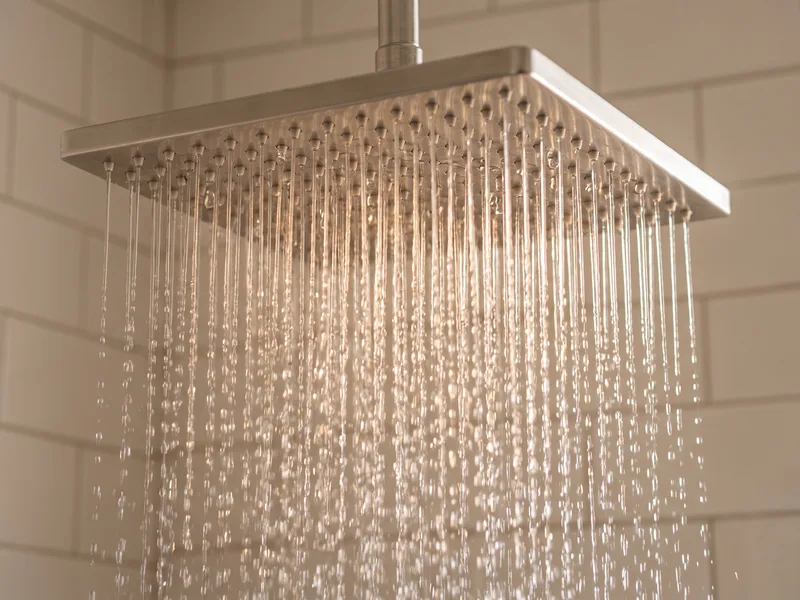
A large rainfall head looks spectacular in a showroom and underwhelming on a wall if the pressure feeding it isn't enough to drive water through its full surface area — a wide, flat spray pattern needs considerably more flow than a traditional handheld head to feel like anything more than a drizzle. This is one of the most common gaps between what's specified and what's actually achievable in a given house, and it's rarely obvious until the shower is running.
How your hot water system affects pressure
| System type | Typical pressure behaviour | Rainfall shower suitability |
|---|---|---|
| Combi boiler | Delivers at mains pressure, consistent but dependent on incoming supply | Usually good, subject to confirmed mains pressure and pipe sizing |
| Unvented cylinder (mains-fed) | Also runs at mains pressure, stored rather than instantaneous | Usually good, and able to supply multiple outlets simultaneously |
| Gravity-fed with loft tank, no pump | Pressure depends on tank height above the shower, often low | Often insufficient for a large rainfall head without a pump |
| Gravity-fed with shower pump | Boosted to a usable level, sized to the shower's demand | Good, provided the pump is correctly sized for the head and any additional outlets |
What we actually check at survey
Rather than relying on the type of boiler or cylinder as a proxy, we measure pressure and flow directly at the point the shower will connect to, using a gauge rather than guesswork. This catches issues a boiler specification alone won't reveal — undersized pipe runs from an otherwise strong mains supply, shared demand with other outlets in the house, or a historic system that's been partially upgraded over the years with a mix of pipe diameters.
Where pressure falls short of what your chosen shower needs, the fix is usually one of three things: a shower pump sized to the specific head and flow rate, upsizing the pipe run feeding the shower, or in some cases reconsidering the head size itself in favour of one matched to what the house can actually deliver. We'd rather flag this before you've bought a shower that can't perform in your property than after.
Flow rate and pressure aren't the same thing
Pressure, measured in bar, is the force pushing water through the pipework; flow rate, measured in litres per minute, is how much water actually arrives at the outlet in a given time. A system can have reasonable pressure but still deliver a disappointing flow rate if the pipe run feeding the shower is too narrow, has too many bends, or is shared with other demand elsewhere in the house — which is why checking pressure alone at the mains doesn't tell the whole story for a specific shower position. We measure both at the point of use, not just at the stopcock, because that's the only figure that actually predicts how the shower will perform once it's fitted.
Manufacturers specify large rainfall heads against a minimum flow rate as well as a minimum pressure, and it's possible to meet one figure without comfortably meeting the other — a common reason a shower that tested fine on paper still underwhelms once installed, if the pipe sizing wasn't checked carefully enough beforehand.
Practical ways to boost pressure where it falls short
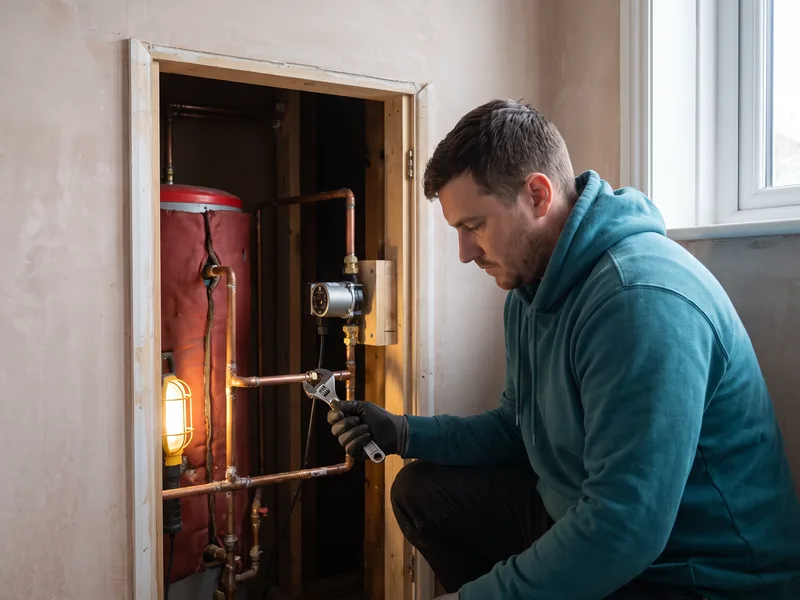
Where a survey finds pressure or flow below what a specified shower needs, three practical options generally come up, in rough order of how disruptive they are. The simplest is a shower pump, sized to the specific head and installed close to the point of use, which works well on gravity-fed systems and some combi setups. Next is upsizing the pipe run feeding the shower, replacing a narrow, older diameter pipe with a wider modern one over the relevant section — more disruptive since it usually means lifting a floor or opening a wall, but it solves the problem at the source rather than adding a pump. Last, and sometimes the right answer anyway, is reconsidering the head itself in favour of a model matched to what the house can actually deliver, since a smaller or differently designed head can still feel generous at a lower flow rate than a very large flat rainfall plate needs to perform properly.
Hard water and its effect on flow over time
Berkshire sits within a predominantly hard water area, and limescale build-up inside pipework and shower valves over years can gradually reduce flow even where pressure at the mains hasn't changed at all — a shower that performed well when first installed can feel noticeably weaker years later purely from internal scale narrowing the effective bore of the pipe or clogging the fine nozzles of a rainfall head. Periodic descaling of the shower head itself, following the manufacturer's cleaning guidance, is a simple piece of maintenance that keeps the nozzles clear, though it won't address scale building up further back in the supply pipework, which is a less visible and more involved issue to resolve.
A whole-house water softener or a scale-reduction device fitted at the point the mains enters the property is worth considering on a full re-fit if hard water is a known issue in your specific road or area, since it protects not just the shower but brassware, the hot water system and tiled surfaces from scale build-up more broadly — a conversation worth having at survey if you've noticed scale problems in the existing bathroom already.
Sources and standards
Minimum pressure and flow figures referenced here are typical manufacturer requirements for large-format rainfall heads and vary by model — the specific unit's installation instructions are the figure that matters. Plumbing installation and backflow prevention follow Building Regulations Part G and the Water Supply (Water Fittings) Regulations 1999.
Multiple outlets on one shower system
A specification combining a large rainfall head with a separate handheld shower and body jets multiplies the demand on the system if more than one outlet can run simultaneously, and this needs checking against available flow at survey, not assumed from the rainfall head's spec sheet alone. Thermostatic shower valves designed for multiple outlets are built to maintain consistent temperature across combinations, but they can't create flow that isn't available from the supply — if the incoming pressure and pipe sizing can comfortably support only one or two outlets at once, that's the figure to design the specification around, even if the valve itself is rated for more.
This is one of the more common gaps between a showroom display, where every outlet runs beautifully because the display is plumbed to generous, dedicated supply, and a real house where the same combination has to share whatever the existing mains and pipework can actually deliver.
What a pressure upgrade involves, practically
Where a shower pump is the recommended fix, it's typically installed close to the hot water cylinder or in an accessible void near the bathroom, wired to a dedicated switched supply, and commissioned to the specific flow rate the chosen shower needs — a straightforward addition on most refits rather than a major undertaking, and one we coordinate as part of the wider installation rather than treating as a separate job. Pipe upsizing is more involved, since it usually means accessing the run between the supply and the shower position, which can mean lifting floorboards or opening a chased wall depending on how the original pipework was routed through the house.
We'd rather identify which of these is needed at survey, price it into the quote from the outset, and have the shower perform as specified from day one, than have a client discover a pressure shortfall only once an expensive shower head is already fitted and underperforming.
Related services
Related guides
Areas served
What we test before calling the job finished
At commissioning, we run every outlet in the room at once where more than one is fitted, check the shower at both minimum and maximum settings, and confirm temperature stability holds when another tap elsewhere in the house is opened — a basic test of whether the thermostatic valve is doing its job under realistic household conditions, not just in isolation. This is walked through with you before we consider the installation complete, so you've seen the shower actually perform under the conditions it'll face day to day, not just a single quiet test run with nothing else in the house drawing water.
Frequently asked questions
Most large rainfall heads want a minimum of around 1 to 1.5 bar, and perform noticeably better above 2 bar. Below that, flow can feel weak despite the head looking impressive — checking actual pressure and flow at survey, not assuming from the boiler type, is the only reliable way to know.
Often, yes — combi boilers deliver mains pressure directly, which is usually sufficient, though actual pressure still depends on your incoming mains supply and pipe sizing, not the boiler alone. We measure it rather than assume.
Yes, but it typically needs a pump to boost pressure to a usable level for a large head, since gravity-fed pressure depends on the height of the tank above the shower and is often too low on its own for a full rainfall experience.
Sometimes — a shower pump, a pressure-boosting unit, or in some cases simply upsizing the pipe run to the shower can solve it without a full system replumb. What's right depends on your specific setup, which is exactly what the survey establishes.
Not necessarily more, but they do need the incoming pressure and flow to be within the specific range stated by the manufacturer for that unit, since the digital valve and pump, where fitted, are calibrated to work within defined limits.
It can, particularly on a gravity-fed or combi system without a pump, where pressure is shared across simultaneous demand. We factor this into the specification if more than one bathroom is likely to be in use at the same time.
Written by the Install My Bathroom installation team — 30 years fitting high-end bathrooms.
Last updated: 2026-10-05